
Which Livermore Public Records Are Open
Access follows the kind of record, not the place name alone. Livermore keeps its own council, permit, code, and police material. Alameda County holds deeds, parcels, tax accounts, court files, jail data, and certificates for county events. State agencies keep statewide certificates, custody information, business filings, and license records. The CPRA opens many agency files, but it does not cancel the separate laws that govern courts, vital certificates, voter files, or protected personal data.
| Livermore record | Official keeper | Web coverage | How access works |
|---|---|---|---|
| Deeds, liens, recorded instruments | Alameda County Clerk-Recorder | Electronic index, 1969 to present | Index online; older search at the office; copies by mail or counter |
| Civil, family, probate cases | Alameda Superior Court | eCourt by name, case, calendar, or filing report | Account and fees for images; public terminals at no cost |
| Criminal case information | Alameda Superior Court | Odyssey cases with activity since 2005 | Web case information; documents through a request or kiosk |
| Parcels and tax accounts | County Assessor and Treasurer-Tax Collector | Current APN, address, map, and tax channels | Free lookup; printed maps and some copies cost extra |
| Birth, death, marriage certificates | County Recorder or CDPH | Order pages, not a recent open name index | Authorized or informational copy rules apply |
| City actions, permits, police files | City Clerk and city departments | Repository, Accela, and request center | Search posted files or submit a focused request |
Not every government-held file is open. Sealed and expunged matters stay closed. Juvenile records need the court petition process, and adoption records need a court order. Recent vital certificates follow identity and eligibility rules. Driver data is restricted by federal law. Police material may lose investigative, victim, medical, juvenile, or other protected details before release.
Note: A public index may confirm that a record exists without providing the underlying image, protected fields, or a certified copy.
Livermore Records Cross the 1969 Divide
The Alameda County Clerk-Recorder's electronic official-record index begins in 1969. Deeds, liens, releases, and other recorded instruments before that cut line must be searched in person. The online research step should identify enough detail for a copy order, but the county's live form fields were not confirmed in the research capture. It should not be treated as a complete image archive.
The county's recorder research and copy instructions show the online and offline split.
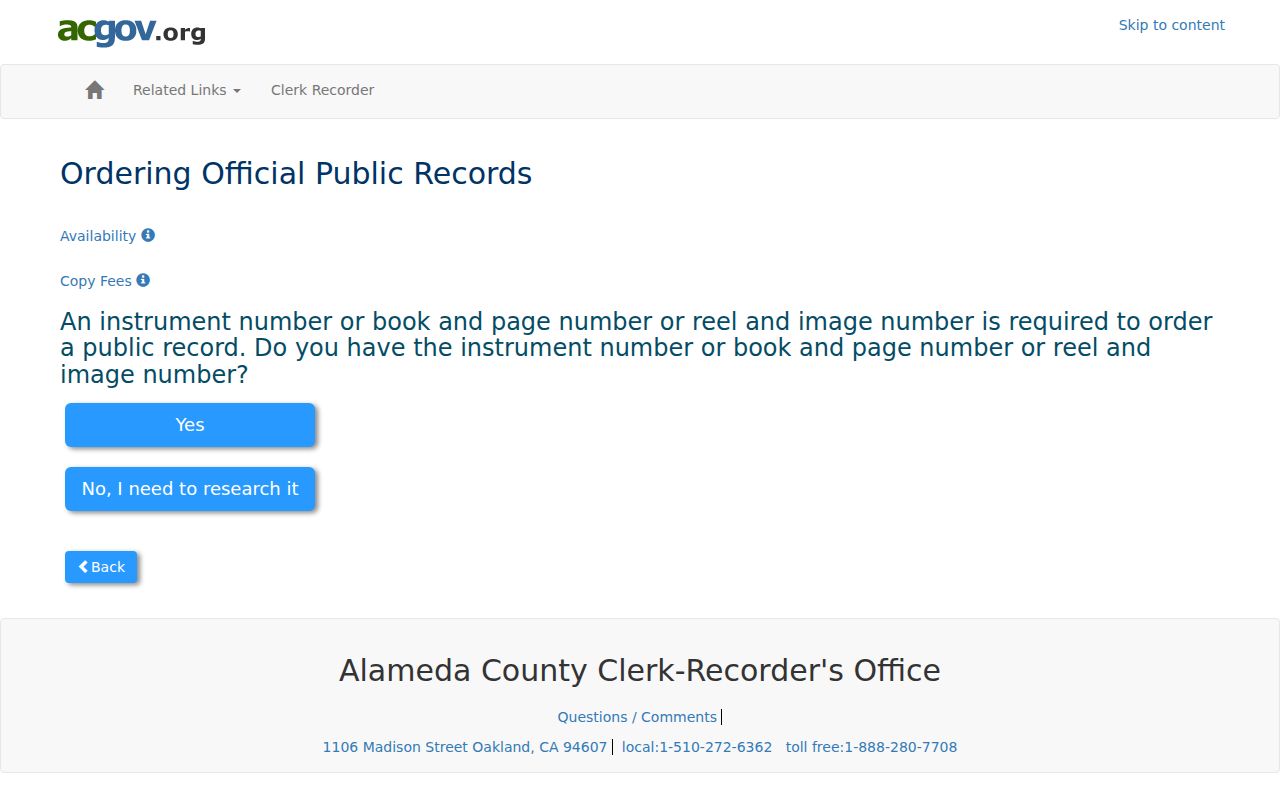
The page also sets out counter and mail copy routes. A mailed order needs a filing number, fictitious business name, or owner name, payment, and a self-addressed stamped envelope. Counter visitors complete a copy request form. Most requests are handled then, while large orders may take one to three business days.
| Portal entry | County disclaimer page leads to the electronic search site |
|---|---|
| Electronic coverage | 1969 to present |
| Older records | In-person research at the Clerk-Recorder |
| Mail copy key | Filing number, FBN, or owner name, plus payment and SASE |
| Counter copy key | Completed copy request form and payment |
Livermore Records Offices and Portals
Most county counters are outside Livermore. The Recorder and Assessor have main Oakland offices, while the Assessor also lists a Dublin satellite office. East County Hall of Justice in Dublin is a key criminal-record contact for the eastern part of Alameda County. Call the custodian before traveling when a file date or case type may route the request elsewhere.
Alameda County Clerk-Recorder
1106 Madison Street, Oakland, CA 94607
(510) 272-6362
Alameda County Assessor
1221 Oak Street, Room 145, Oakland, CA 94612
(510) 272-3787
East County Hall of Justice
5151 Gleason Drive, Dublin, CA 94568
(925) 227-6700
The Assessor lists weekday lobby hours of 9:00 a.m. to 4:30 p.m., except holidays, for its Oakland and Dublin public offices. Recorder printing stops at 4:15 p.m.; copy orders received after 4:00 p.m. move to the next day. These are different systems, so a parcel question and a recorded-deed question may require two stops.
Searching Livermore Court Records
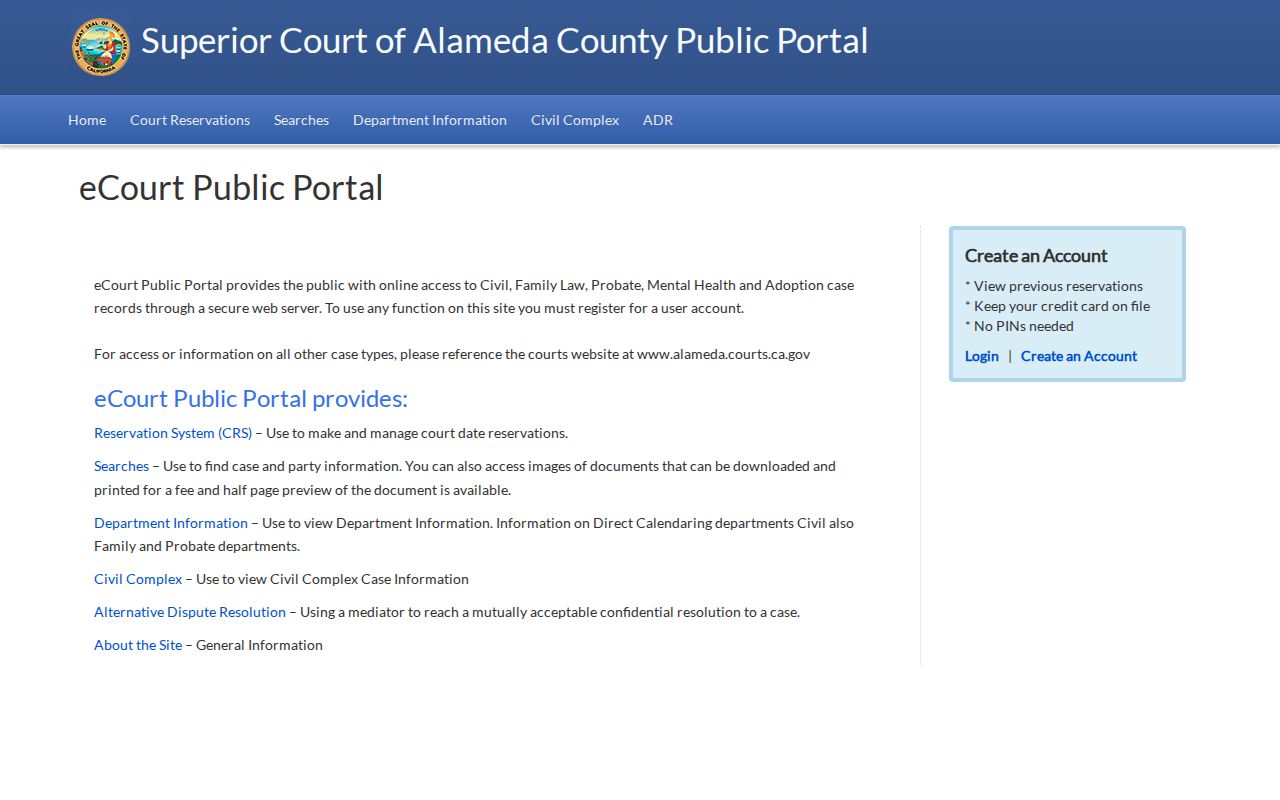
Alameda Superior Court divides access by case type. eCourt covers civil, family law, probate, mental health, and adoption case information, though confidential limits still apply. Users must create an account for eCourt functions. Search modes include name, calendar, case number, and public filing reports. Images may be downloaded for a fee, and the portal offers a free half-page preview.
The Alameda eCourt home screen shows the account and search controls.
Criminal case information uses Odyssey instead. Public web results are limited to cases with activity since 2005 and do not provide the documents. In-person information reaches many criminal cases opened since 1974, and Odyssey kiosks can show public documents for cases with post-2005 activity.
The court's records request and information page explains terminal, mail, and division routes.
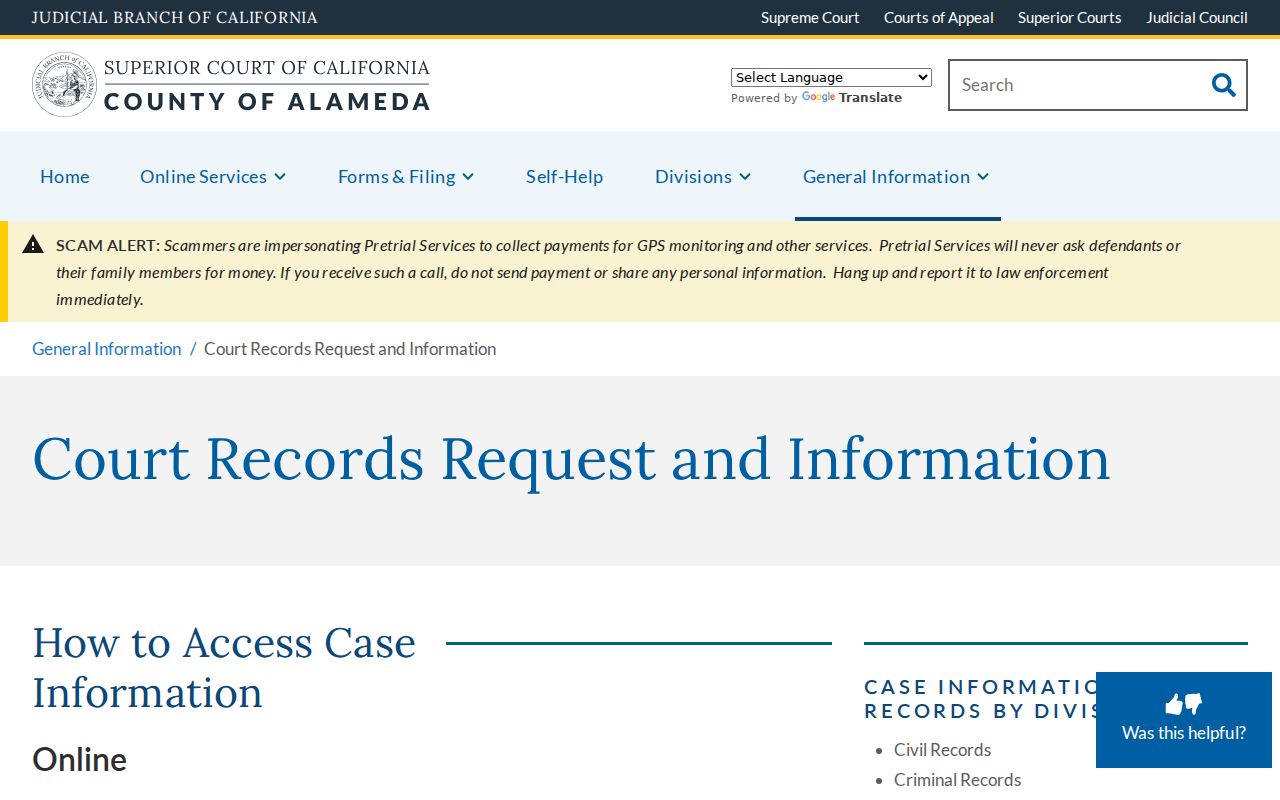
Public terminals and indexes are free to use, but files remain on the premises. The court does not conduct research by phone or email. Mail searches are available. Probate images are online for filings after January 31, 2006, except conservatorships, guardianships, and confidential documents. Family case information is limited online, and family documents are not posted.
Livermore Property Records Use Three Portals
The Assessor, parcel map system, and tax portal answer different questions. The Assessor Property Search accepts parcel number, type-ahead address, or property address. Its visible landing page does not offer a confirmed owner-name field, so start with the address or APN. An APN is the county's stable parcel identification number.
The Alameda Assessor Parcel Viewer supplies the map and office-contact layer.
Parcel maps are free online. Printed maps cost $3 for a 14-by-18-inch sheet or $1 for an 8.5-by-11-inch sheet and may be ordered in writing from the Mapping Unit. The Recorder then supplies the deed and lien trail tied to that parcel.
The separate Alameda property tax lookup splits real-property bills from unsecured business or personal-property taxes.
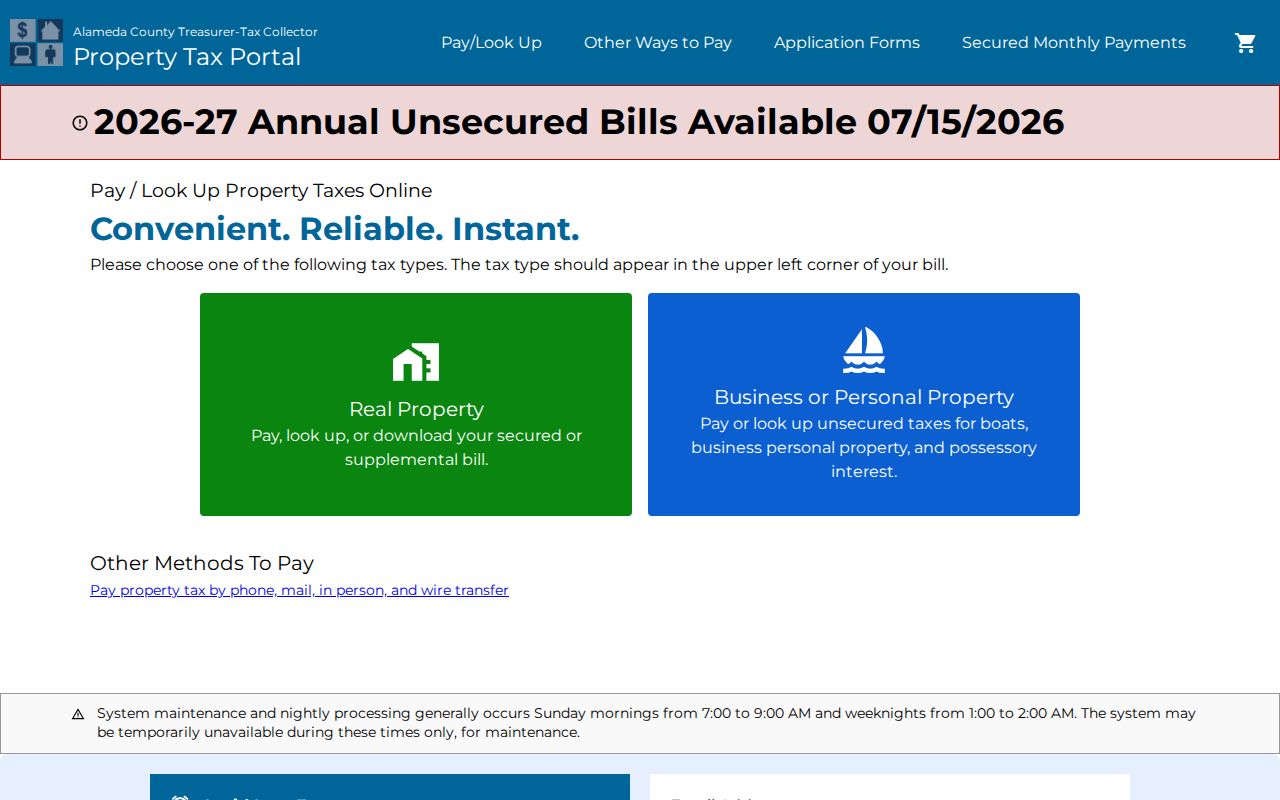
Use the Real Property branch for secured or supplemental bills. The other branch covers such items as boats, business personal property, and possessory interests. Livermore permit records add a city layer through Accela searches by site address, parcel number, contractor license information, or record information.
Livermore Public Records Are Not All Online
The strongest local records myth is that an online portal holds the whole file. It does not. Pre-1969 recorded documents require an office search. Court kiosks may expose public documents that the web portal does not. Family files have limited online detail, while their documents remain offline. Older city material may be browsed in the municipal repository, but a request is still needed when the desired file was never posted.
Livermore's city repository reaches back to incorporation: council minutes and ordinances run from 1876 to the present. Resolutions begin in 1944, redevelopment minutes in 1981, agenda packets in 2000, and summary agendas in 2003. Searchers can browse folders or search a word or phrase. Scanned documents convert to PDF, but the system caps each conversion at 75 pages, so a long file appears as several PDFs.
Note: When a portal stops short, use its index details to make the counter, mail, or records-center request precise.
Livermore Vital Records Copy Rules
Alameda County issues birth, death, and marriage certificates for events or licenses in the county. CDPH provides the statewide channel. California Health and Safety Code section 103526 separates an authorized certified copy from an informational certified copy. The authorized version requires an eligible requester and sworn statement. An informational copy is marked as not valid to establish identity.
The California Vital Records hub routes users to applications, fees, processing times, and sworn-statement guidance.
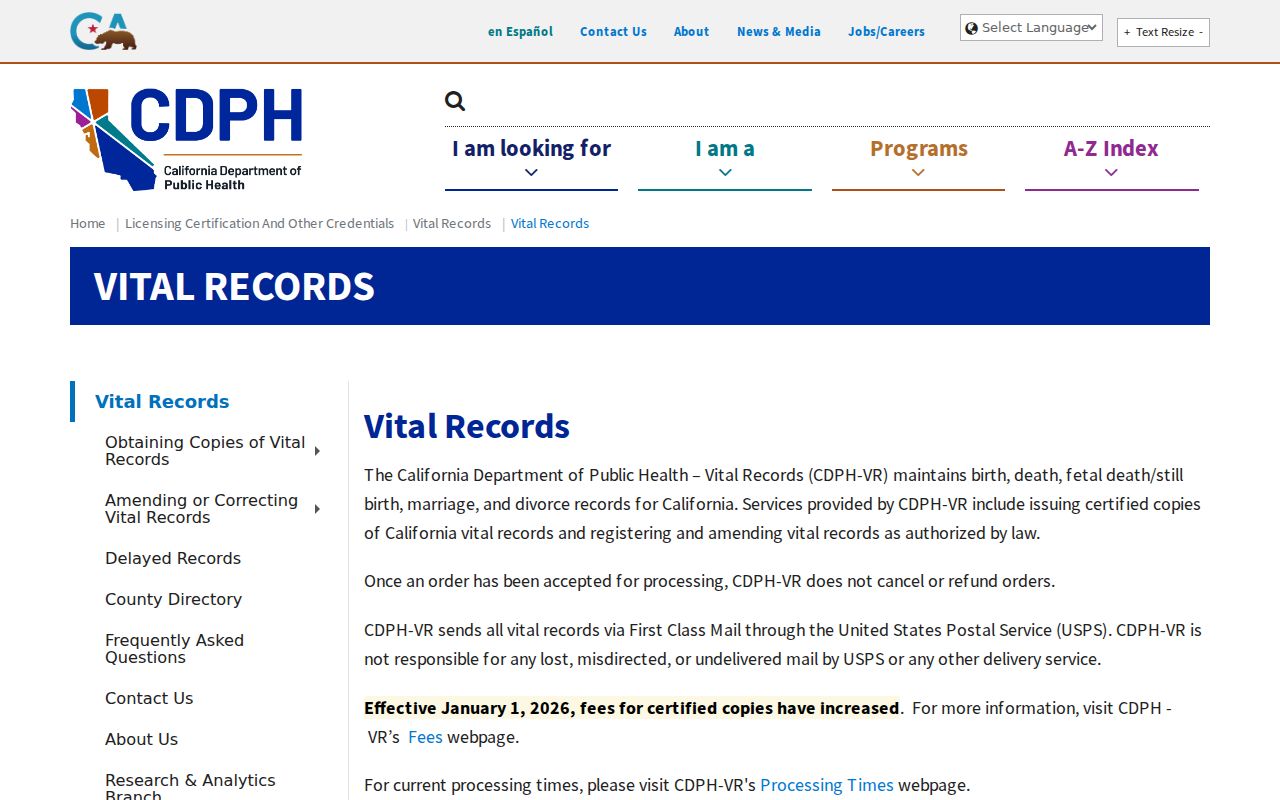
Accepted state orders are not canceled or refunded and are mailed by USPS First Class Mail. County copies cost $36 for birth, $28 for death, and $21 for marriage. An online marriage order adds one $2 convenience fee per order. Alameda marriage certificates are generally available about two weeks after filing, while certificates from before 1854 are unavailable through the county page.
Copy eligibility matters. A certificate order is not an open name search. Select the correct authorized or informational copy and follow the current application instructions.
Livermore Custody and Registry Records
Current county custody, state prison custody, and the public offender registry are separate record sets. The Alameda County Sheriff's Inmate Locator accepts either a PFN or both first and last name. Its Pending Release notice means the administrative release process has begun, not that release is certain or immediate. Another legal hold may stop it.
CDCR's CIRIS result can include name, CDCR number, age, current location, commitment county, admission date, and parole-hearing information for people now in state custody. The federal Bureau of Prisons locator covers federal inmates from 1982 forward. California's Megan's Law site displays only registrants and fields allowed for public disclosure. Its data can change fast, and a name, age, or address alone can produce mistaken identity.
Livermore Police report copies use the city's request center and front counter. Report contents are not disclosed by phone. Collision report copies cost $10, and the department advises waiting ten business days, then calling Records to confirm availability.
Fees for Livermore Record Copies
Search access and copy cost are not the same. Alameda recorded-document research may begin online, but a plain copy costs $3.50 per page. A certified copy costs $4.50 for the first page and $3.50 for each added page. Counter printing stops before the office closes, so late copy orders move to the next business day.
Court charges depend on the search, copy, document image, or current fee schedule. Do not mail cash or card details. The court accepts the listed forms of payment for records work. Online parcel maps are free, while printed maps have set sheet prices. Vital-copy fees are charged per certificate. Agency-specific charges should always be checked at the source because CPRA does not impose one flat statewide copy price.
Livermore Record Terms Defined
Small wording differences control what a custodian can deliver. These terms help keep a request tied to the actual product an office holds.
- Index
- A searchable list that points to a filing or case. It may not include the full document image.
- Certified copy
- An official copy bearing the custodian's certification. It costs more and may carry eligibility rules.
- Custodian
- The city, county, court, or state office responsible for keeping and releasing a record.
- Exemption
- A law that permits or requires an agency to withhold a record or protected part of it.
- Redaction
- The removal of protected details while the rest of a record is released.
Ask for the index first when the filing is unknown. Once the right entry is found, order the plain or certified form that fits the need.
Requesting Livermore Public Records
The California Public Records Act timing rule gives an agency ten days to determine whether it holds disclosable records responsive to a copy request. The notice should state the decision and reasons. If records are open, it should also estimate when they will be available. Written notice may extend the determination by no more than fourteen days for defined unusual circumstances, including a search across field sites, a large record volume, consultation, data extraction, a cyberattack, or listed emergency effects.
- Name the custodian. Send a city file to Livermore, a deed to the Recorder, and a case record to the court division that holds it.
- Check posted material first. Capture a case number, filing number, parcel number, date range, department, or record title from the relevant index.
- Describe an identifiable record. Use Livermore's GovQA center for city files and the office's own mail, online, or counter procedure elsewhere.
- Choose the copy form. State whether inspection, an electronic file, a plain paper copy, or a certified copy is needed.
- Read the response closely. If an office cites an exemption or cannot identify the file, narrow the scope or ask which detail would locate it.
A CPRA determination is not always the same as delivery. A large open set may take longer to collect and review, and protected fields can require redaction before release.
Lawful personal use. Open access does not permit stalking, harassment, threats, or identity misuse. Verify identity and context before acting on a record.
Livermore Deed Alerts Fight Fraud
Alameda County's Real Estate Fraud Notification Letter program adds a timely safety layer to recorded documents. Launched in 2023, it sends more than 5,000 notices each month when real estate documents are recorded against county property. A notice includes the first page of the recorded instrument and contact information for the District Attorney's Real Estate Fraud Unit.
The program can flag deed transfers, liens or other encumbrances, loan defaults, foreclosure actions, trustee sales, and judgments. County reporting describes fraudulent deeds and people posing as property owners. The safest response is to compare the notice with the official Recorder record, avoid giving personal data or cash to an unverified party, and contact the unit through the number on the county notice when the filing looks wrong.
Note: A county alert is a prompt to inspect the official filing, not proof by itself that fraud occurred.